
Push the Rock The slide is the farm, not the climb
Master the descent: coin pickup timing, rollback lanes, and why height without survival pays nothing.
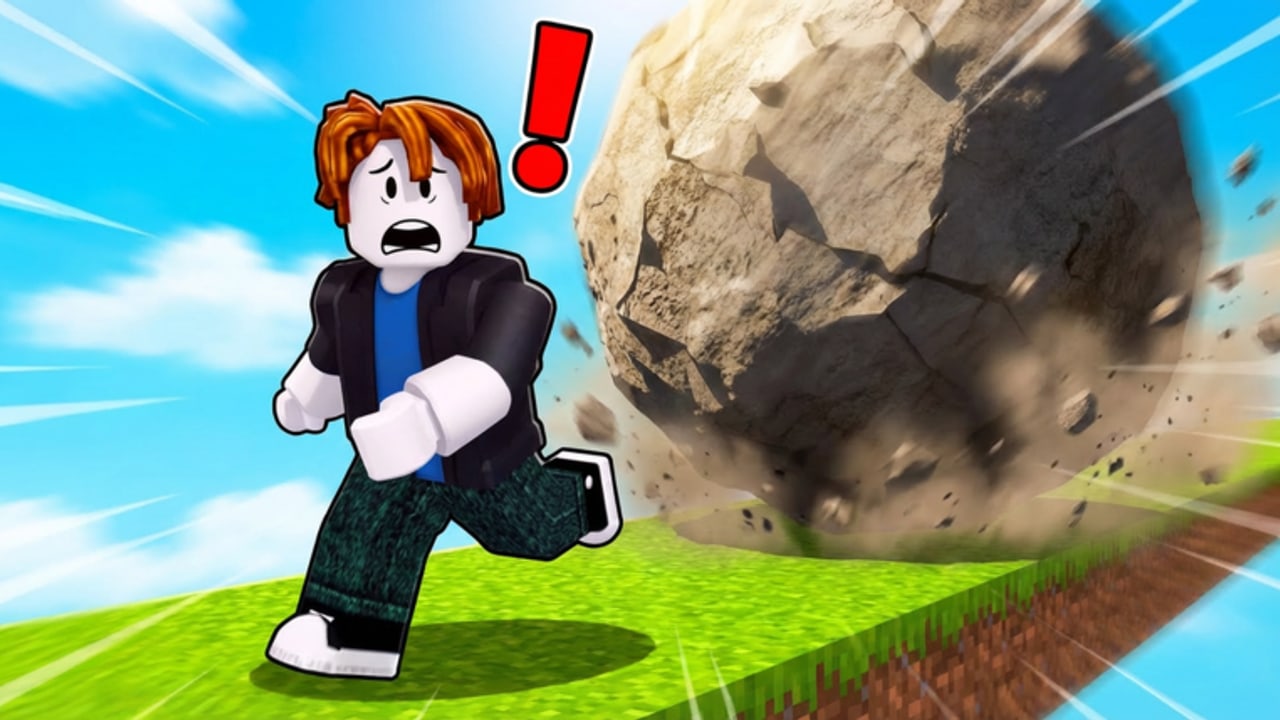
The slide in Push the Rock is where coins live. The climb sets a height record you cannot spend. The descent is the paycheck. This page covers the mechanics of the slide: how coins spawn on the downhill, how to stay alive when eighteen players are all rolling back at once, and why the fastest slide is not always the richest one.
Studio Stinky’s experience (place 139574563597312) last updated on 13 April 2026. The slide mechanics described here match that live set. If a patch changes the descent physics, the updates hub should reflect it.
Why the slide matters more than the climb
Push the Rock punishes two mistakes equally: standing in a rollback, and treating the climb as the content. The climb is the setup. The slide is the transaction. You cannot spend altitude. You can spend coins. Coins live on the downhill.
The higher you climb before your avatar lets go, the longer the pickup line on the way down — if you survive the descent. A crushing rollback banks zero coins regardless of how far the rock traveled uphill. The skill on this game is not pushing harder. It is knowing when to stop pushing and start sliding.
When to start the descent
Start the descent when the hold is about to break, not after. Waiting until the boulder is already moving backward means you are now in the rollback lane with no head start. Good descent timing looks boring: you are already moving downhill when the rock decides to come back.
The auto-push toggle on the HUD does not change this. Auto-push keeps the boulder climbing while your avatar still has grip. The moment the grip fails, the rock rolls back whether auto-push is on or not. Auto-push does not lock the rock to your hands.
Coin pickup on the slide
Coins appear along the descent path. The exact spawn pattern is part of Studio Stinky’s design, not a published map. General guidance from player footage: coins cluster at certain slopes and straightaways. High-speed slides collect more coins per second but also pass through pickup zones faster. There is a balance between speed and collection efficiency that changes by world.
Stay in the lane on the way down. Coins are not scattered across the map; they follow the path. Leaving the path early to dodge a rollback also leaves coins uncollected. The decision to lane-change should be about survival, not preference.
Rollback lanes and server traffic
Servers hold up to 18 players. When the server is busy, multiple avatars are pushing, letting go, and rolling back at the same time. The rollback lane is not a single file line. It is every lane the boulder traveled. If you pushed up the left lane and someone else pushed up the right lane, both lanes are now rollback lanes.
The safest position on descent is beside the path, not on it. Sliding directly behind your own boulder is the most dangerous spot: you have the least reaction time when the rock decides to come back. Other players’ rollbacks are harder to predict. Watch the slope, not your own push history.
Eighteen-player servers also mean eighteen potential rollback sources. A clear run on World 1 can still end in a crush from a player who pushed from a different section of the hill. The how to survive rollback page covers the sidestep; this page covers the timing that makes the sidestep possible.
Slide speed and the coin tradeoff
Faster slides mean more coins per minute in ideal conditions. In practice, the tradeoff is survival. A slide speed that prevents dodging a rollback is not an upgrade; it is a wipe. The optimal slide pace is the fastest descent where you can still react to obstacles.
Speed boosts purchased from the partner board can increase slide speed. Whether that increase translates to more coins depends on whether you survive the faster descent. A speed-boosted slide that ends in a crush is worse than a normal-speed slide that banks everything.
World differences on the slide
World 1 slide is the tutorial descent. Coins spawn in forgiving patterns. The rollback lanes are short. Survival is easy enough that new players can bank coins without a plan.
World 2 and later slides add longer rollback lanes, more lateral space between paths, and higher stakes for misreading the descent. The worlds walkthrough covers the badge difficulty; this page covers why the slide matters more on those later worlds. A failed World 4 crest with a full coin purse is a better session than a failed World 4 crest with zero gold.
What we do not know about the slide
We do not have confirmed data on coin spawn rates by world, exact pickup radii, or whether slide speed affects collection range. Studio Stinky has not published a mechanic sheet. This page reflects what player footage shows: coins on the path, survival on the descent, and the general relationship between height and pickup length.
We also do not have confirmed data on whether partner speed boosts apply to the slide or only to the climb. The board sells a speed boost; whether it applies to descent, ascent, or both is not something this wiki can verify from public footage alone.
The slide and the loop
Slide mechanics are part of the core loop described on how to play. The descent is not a victory lap. It is the income phase. Mastering when to start it, how fast to take it, and where to position on a crowded server is what separates a coin printer from a player who keeps getting flattened on the way down.
Read how to farm coins for the spend-side of that loop. Read partner builds for loadouts that balance climb speed and slide income. Then go push, and come down smarter than you went up.
Frequently Asked Questions
Quick answers for hill climbs, partners, and world badges.
Why do I get no coins after a good push?
The slide is where coins collect. A high climb without survival on the descent banks zero. Leave the lane before the rollback, then collect on the way down.
Should I slide or run down?
Slide is faster and collects coins faster. Run is a fallback when the path is blocked by a rollback you need to dodge. Use slide as the default.
Do other players affect my slide?
Yes. Eighteen players mean multiple rollback sources. Watch the whole slope, not just your own boulder. Other players' rollbacks are not predictable from their push position.
Does the speed boost affect slide speed?
The board sells a speed boost. Whether it applies to descent, ascent, or both is not confirmed by Studio Stinky as of September 2026.
Are coins only on the main path?
Yes. Coins follow the descent path. Leaving the path early to dodge a rollback means leaving coins uncollected.
Does the slide change by world?
World 1 is forgiving. Later worlds have longer rollback lanes and more lateral space. The stakes of a bad slide increase as you unlock higher maps.