
Push the Rock Strength upgrades and stat scaling
How Push the Rock measures your pushing power, how muscle increases across runs, and what the +1 Muscle stat actually does.
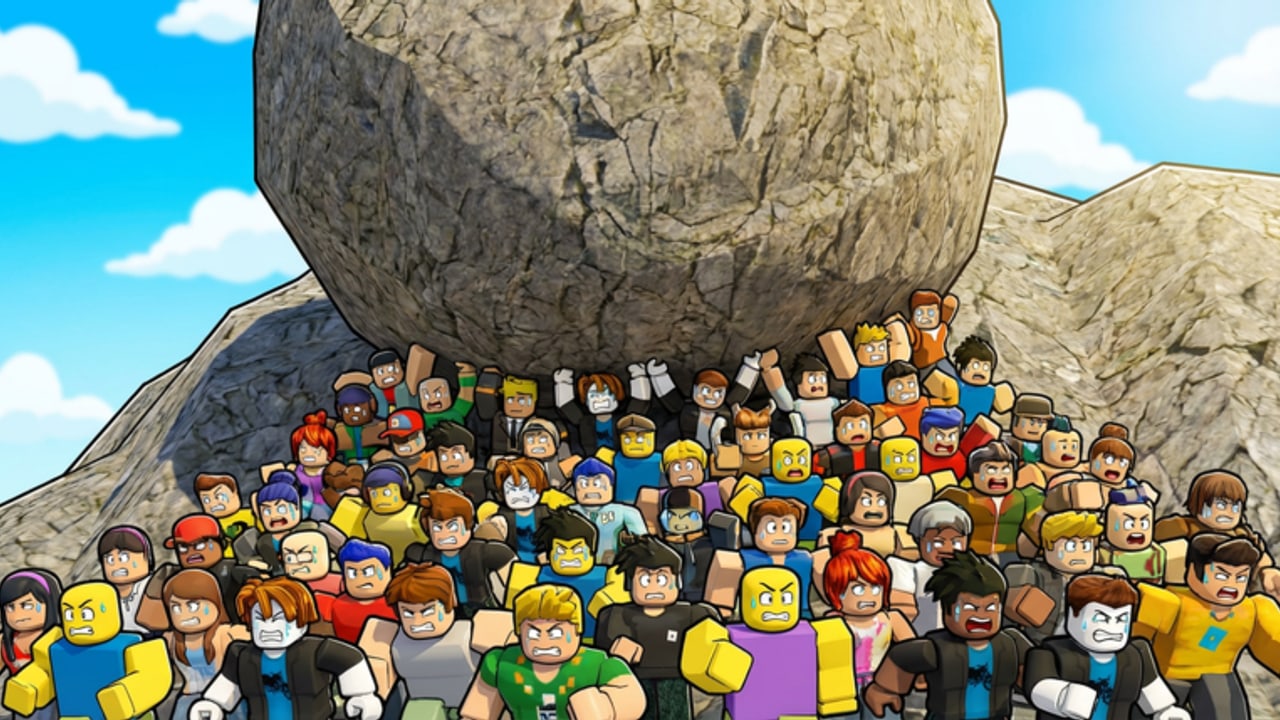
Push the Rock includes a muscle and strength system that determines how hard your avatar pushes the boulder. Starting at +1 Muscle, players gain strength with each run, eventually reaching levels where pushing every rock on the hill becomes possible. This page explains how the system works based on public gameplay footage and Studio Stinky’s official pitch.
The experience is Studio Stinky’s place 139574563597312, universe 9745798212. The last known update was 13 April 2026. The muscle system described here matches what player footage shows: a stat that increases with play time and affects push power.
What is the muscle system
The muscle system is Push the Rock’s version of an incremental upgrade path. Instead of resetting to zero after each session, your avatar’s base pushing strength increases. The pitch from gameplay videos is explicit: “I started with just +1 Muscle, but by training harder and unlocking insane strength, I became powerful enough to push EVERY ROCK in Roblox.”
This is a long-term progression system separate from the partner board and the speed boost. Partners and boosts affect individual runs. Muscle affects your baseline pushing power across all future runs.
Starting stat: +1 Muscle
Every new player starts at +1 Muscle. This is the minimum pushing power. At +1, pushing the boulder is slow and exhausting. The avatar tires quickly. The hill feels genuinely difficult.
The Welcome badge fires automatically for all new accounts, but the muscle system is the real tutorial. Players who rush past the early runs expecting World 4 to be accessible immediately miss the progression the game is built around.
How muscle increases
Muscle increases through repeated play. Each completed push-and-slide cycle adds to the stat. The exact increment per run is not published by Studio Stinky, but player reports and footage confirm the general direction: more runs equal higher muscle.
The system is passive. There is no separate training mini-game or gym interface mentioned in the experience description. The muscle increases as a result of playing the core loop: push, survive, slide, spend, repeat.
Partner purchases and world unlocks do not directly increase muscle. The board accelerates individual runs; muscle accelerates all runs. They are separate progression tracks.
Why muscle matters more than partners early
New players often fixate on partners as the first upgrade. Partners do improve runs, but a +1 Muscle avatar with a partner still pushes slower than a +5 Muscle avatar without one. Early progression is dominated by muscle gains, not board purchases.
The exception is the speed boost, which the board sells separately. Whether the speed boost stacks with high muscle for even faster pushing, or whether it simply duplicates what high muscle already provides, is not confirmed by public data.
Muscle and world progression
Higher muscle makes later worlds accessible. World 2 is the first real gate at around a 36 percent win rate. That difficulty is partly a coin-check and partly a muscle-check. A player with enough muscle can push further before tiring, reaching higher on the hill before the avatar lets go.
Worlds 4 through 6 have win rates below 1 percent. Those are not muscle checks alone; they are muscle, coin, and partner checks combined. But the foundation is always muscle. A high-muscle player with basic partners can attempt World 4. A low-muscle player with all the partners cannot.
The worlds walkthrough covers badge difficulty. This page covers the stat that makes those badges reachable in the first place.
High muscle and the “push every rock” ceiling
At sufficiently high muscle levels, player footage shows avatars capable of pushing every rock on the hill without the usual tire-out mechanic. This appears to be the game’s ceiling for the strength system: not just faster pushing, but a qualitative change where the fatigue timer no longer limits the climb.
Reaching that ceiling takes significant play time. For context, the average session length in this genre is around twelve minutes. Players who post “I can now push every rock” content have typically spent dozens of hours in the experience.
This is the long-term goal of the muscle system, and it is why the game labels itself as incremental. The early runs feel slow. The later runs feel powerful. The progression is the content.
Muscle and the partner board
High muscle does not make the partner board irrelevant. Partners provide run-specific boosts that muscle alone cannot. A high-muscle player still benefits from coin-collection partners, slide-speed partners, and the various helper roles on the board.
The partner board and the muscle system are complementary tracks. Muscle determines how hard you push. Partners determine how efficiently you spend what you earn. Both increase over time.
What we do not know about muscle
Studio Stinky has not published exact muscle-per-run numbers, a muscle cap if one exists, or whether muscle gains slow at higher levels. The “push every rock” ceiling is the closest thing to a known endpoint, but even that is inferred from footage rather than confirmed in patch notes.
We also do not know whether muscle gains apply to the current session or only to future sessions after a logout-login cycle. The general assumption from incremental games is permanent gains, but Push the Rock’s specific implementation is not documented.
The long game
The muscle system is why Push the Rock is labeled an incremental rather than a pure physics game. The boulder does not change. The hill does not change. Your avatar’s ability to move that boulder is what changes over time.
Read getting started for the first-session loop. Read how to play for the full cycle. Read partner builds for loadout planning. Then put in the runs. The muscle comes with the time.
Frequently Asked Questions
Quick answers for hill climbs, partners, and world badges.
What does the muscle system do in Push the Rock?
It increases your avatar's base pushing strength over time. Starting at +1 Muscle, repeated runs make pushing faster and reduce the fatigue timer, eventually reaching a ceiling where every rock on the hill can be pushed without the usual tire-out.
How do I increase muscle in Push the Rock?
By completing push-and-slide cycles. Each run adds to the stat. There is no separate training interface; the progression is passive through normal gameplay.
Does muscle affect all runs or just the current one?
Based on incremental game patterns, muscle appears to be a permanent account-level stat that carries across sessions, not a per-run buff that resets.
Should I focus on muscle or partners first?
Muscle first, for the first several hours. High base pushing power benefits every run. Partners accelerate individual runs but cannot replace low muscle at the start.
Is there a muscle cap?
Studio Stinky has not published a cap. Player footage suggests a qualitative ceiling where the fatigue timer effectively disappears, but the exact stat level at which that occurs is not publicly confirmed.
Does the speed boost replace high muscle?
No. The speed boost is a run-specific partner purchase. Muscle is a permanent progression stat. They stack; they do not substitute for each other.